
loading

Nonwoven Fabric Factory, Since 1997

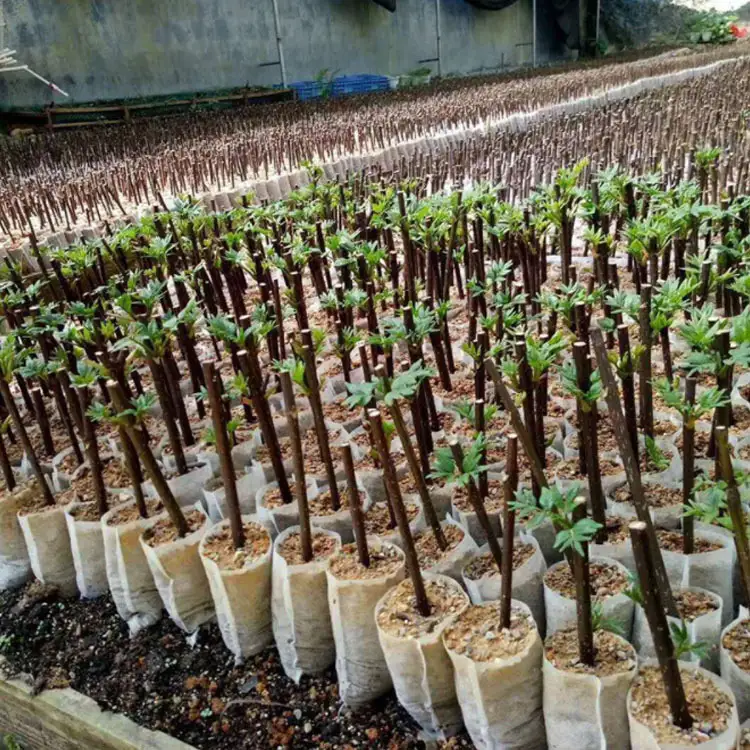
Non-woven fabric is used for seedling bags. 1
Non-woven fabric is used for seedling bags. 2
Non-woven fabric is used for seedling bags. 3
Non-woven fabric is used for seedling bags. 4
Non-woven fabric is used for seedling bags. 5
Non-woven fabric is used for seedling bags. 1
Non-woven fabric is used for seedling bags. 2
Non-woven fabric is used for seedling bags. 3
Non-woven fabric is used for seedling bags. 4
Non-woven fabric is used for seedling bags. 5

Non-woven fabric is used for seedling bags.

5.0
design customization

    oops...!

    no product data.

    Go to homepage


    Nonwoven Fabric for Nursery Pots: Eco-Friendly, Breathable Seedling Cultivation

    Introduction

    In modern horticulture, afforestation, and commercial seedling breeding, nonwoven nursery pots have emerged as a revolutionary alternative to traditional plastic and ceramic seedling pots. Made from sturdy, breathable nonwoven fabric, these biodegradable or reusable planting bags optimize root growth, boost seedling survival rates, and streamline transplanting, making them a preferred choice for nurseries, farms, forestry stations, and gardening suppliers worldwide.
    Unlike rigid plastic pots that restrict root development and cause root circling, nonwoven nursery pots deliver exceptional air permeability, water drainage, and root-friendly growth conditions. For seedling producers, agricultural enterprises, landscaping teams, and international procurement specialists, mastering the properties, benefits, and applications of nonwoven nursery pots is critical to efficient, high-yield seedling cultivation. This article covers core advantages, common material types, quality standards, usage scenarios, and professional sourcing tips for nonwoven fabric used in nursery pots.

    Core Advantages of Nonwoven Nursery Pots

    Nonwoven nursery pots are manufactured from durable polypropylene (PP) nonwoven fabric, engineered to support healthy seedling growth and simplify planting workflows. Its soft yet tough fiber structure solves common pain points of traditional seedling containers, greatly improving cultivation efficiency and seedling quality.

    1. Superior Air Permeability and Air Pruning

    The porous nonwoven structure enables free air circulation around the root zone, delivering ample oxygen to plant roots and promoting robust, fibrous root growth. When roots reach the pot surface, they are naturally air-pruned, stopping root circling and tangling common in plastic pots. This develops a dense, healthy root system that absorbs water and nutrients more efficiently, resulting in stronger, more vigorous seedlings.

    2. Excellent Water Drainage and Moisture Retention

    Nonwoven fabric balances efficient drainage and moderate moisture retention, preventing overwatering and root rot caused by waterlogging. Excess water drains freely through the fabric pores, while the material retains just enough moisture to sustain steady seedling growth. This ideal water regime eliminates root suffocation and fungal diseases, especially crucial for delicate seedlings and saplings.

    3. Stress-Free Transplanting and Higher Survival Rates

    Nonwoven nursery pots can be planted directly into soil without removing seedlings, avoiding root damage, shock, and stunted growth caused by transplanting. The fabric either biodegrades naturally or breaks down in soil, allowing roots to penetrate freely without obstruction. This direct planting method drastically improves seedling survival rates, cuts labor costs, and shortens recovery time.

    4. Lightweight and Space-Saving

    Compared to heavy ceramic, clay, and rigid plastic pots, nonwoven nursery pots are ultra-lightweight and flexible, reducing handling, transportation, and storage burdens. They can be stacked compactly when empty and folded for easy storage, saving valuable nursery space. The lightweight trait also lowers logistics costs for large-scale seedling production and long-distance transportation.

    5. Sturdy, Tear-Resistant and Durable

    Premium nonwoven fabric features high tensile strength and puncture resistance, holding soil securely without tearing or breaking during filling, handling, and moving. The material withstands outdoor weather, including wind, rain, and mild sun exposure, maintaining integrity throughout the seedling growth cycle. Thickened variants offer extra durability for long-term cultivation.

    6. Eco-Friendly and Non-Toxic

    Nonwoven nursery pots are made from safe, chemical-free polypropylene fibers, free of toxins, heavy metals, and harmful additives. They do not pollute soil or harm seedlings, soil microbes, or the surrounding environment. Biodegradable nonwoven variants break down naturally in soil without leaving harmful residue, aligning with organic farming and eco-friendly afforestation standards.

    7. Wide Temperature Adaptability

    Nonwoven fabric insulates roots from extreme temperature fluctuations, preventing overheating in hot weather and frost damage in cold conditions. This stable root zone temperature protects seedlings from thermal stress, supporting year-round cultivation in various climates.

    8. Cost-Effective Mass Production

    Nonwoven nursery pots have a lower unit cost than traditional pots, with efficient manufacturing processes ideal for large-scale bulk production. Reusable and durable, they reduce recurring expenses for pot replacements, delivering exceptional cost efficiency for commercial nurseries and large farms.

    Common Types of Nonwoven Fabric for Nursery Pots

    1. Standard Spunbond PP Nonwoven Fabric

    Spunbond polypropylene nonwoven is the most widely used material for general nursery pots, offering balanced breathability, durability, and affordability. Available in 40–100gsm, it suits most flowers, vegetables, herbs, and small saplings, making it the top choice for regular nursery production.

    2. Thickened Heavy-Duty Nonwoven Fabric

    Thickened high-gram weight (80–150gsm) nonwoven fabric provides enhanced strength and longevity, designed for large trees, fruit saplings, shrubs, and long-term cultivation. It resists tearing and deformation, supporting heavy soil loads and extended growth cycles.

    3. Biodegradable Nonwoven Fabric

    Eco-friendly biodegradable nonwoven fabric decomposes naturally over 1–3 growing seasons, breaking down into harmless components without soil contamination. Perfect for afforestation, ecological restoration, and organic farming, eliminating the need for pot removal and reducing waste.

    4. Anti-UV Nonwoven Fabric

    Treated with UV stabilizers, this nonwoven variant withstands prolonged outdoor sun exposure without premature aging or brittleness. It maintains durability and performance in open-air nurseries, ideal for long-term outdoor seedling cultivation.

    International Quality and Agricultural Standards

    High-quality nonwoven nursery pots must comply with strict agricultural and environmental standards to ensure seedling safety, performance, and reliability. Key certifications and requirements include:
    • EU REACH Regulations: Free of heavy metals and hazardous chemical additives
    • RoHS Compliance: Non-toxic, eco-friendly raw materials
    • Organic Farming Certification: Suitable for certified organic seedling production
    • Biodegradability Testing: Verified natural degradation rate and safety
    • Tensile Strength Test: Ensures tear resistance and structural stability
    • Soil Safety Compliance: Harmless to soil, seedlings, and groundwater

    Wide Applications of Nonwoven Nursery Pots

    Vegetable and Crop Seedlings

    Widely used for growing tomatoes, peppers, cucumbers, eggplants, and other vegetable seedlings, promoting healthy root growth and boosting transplant survival rates.

    Flower and Horticultural Plants

    Ideal for cultivating ornamental flowers, herbs, perennials, and potted plants, producing compact, healthy plants with lush foliage and vibrant blooms.

    Fruit Tree and Forest Saplings

    Perfect for growing fruit trees, garden trees, and afforestation saplings, developing strong root systems that adapt quickly to field planting.

    Greenhouse and Indoor Nurseries

    Suitable for controlled greenhouse cultivation, providing optimal ventilation and drainage for delicate seedlings and rare plant varieties.

    Afforestation and Ecological Restoration

    Biodegradable nonwoven nursery pots are widely used in reforestation, mountain afforestation, and ecological restoration projects, enabling fast, high-survival-rate planting.

    Home Gardening and Urban Greening

    Lightweight and easy to use, nonwoven nursery pots are perfect for home gardens, balconies, rooftop gardens, and urban greening projects.

    Commercial Nursery Production

    Scalable and cost-effective, nonwoven nursery pots meet the demands of large-scale commercial nurseries, improving production efficiency and seedling quality.

    Critical Sourcing Considerations for Nonwoven Nursery Pots

    For global seedling producers, nurseries, and buyers, selecting reliable nonwoven nursery pots requires evaluating these core factors:
    • Fabric Gram Weight: Choose 40–150gsm based on seedling size and growth cycle
    • Breathability and Drainage: Balanced porosity for healthy root growth
    • Durability and Tear Resistance: Sturdy structure to hold soil securely
    • UV Resistance: Anti-aging treatment for outdoor use
    • Environmental Safety: Non-toxic, compliant with organic standards
    • Size Variety: Multiple diameters and heights for different seedlings
    • Biodegradable Option: Eco-friendly choice for afforestation and organic farming
    • Cost Efficiency: Competitive pricing for bulk nursery production

    Conclusion

    Nonwoven fabric has transformed seedling cultivation, delivering a root-friendly, efficient, and eco-friendly solution that outperforms traditional planting containers. With superior breathability, air pruning, and stress-free transplanting, nonwoven nursery pots maximize seedling survival rates, reduce labor, and support sustainable agriculture and afforestation.
    As global demand for high-quality seedlings and green cultivation rises, nonwoven nursery pots have become an indispensable tool for commercial nurseries, farms, and landscaping projects. Choosing compliant, high-quality nonwoven nursery pots ensures healthy seedling growth, higher yields, and eco-friendly operations.

    We are a trusted global supplier of premium nonwoven fabric and finished nursery pots, offering standard, thickened, UV-resistant, and biodegradable options. All products meet international agricultural standards, with full size customization and bulk production support. Contact us today to source reliable, seedling-friendly nonwoven nursery pots for your cultivation projects.

    Product Details

    Q1: What is spunbond nonwoven fabric?
    A: Spunbond nonwoven fabric is a type of nonwoven material produced through a process involving melt spinning, web laying, and thermal bonding. Classified as a dry-laid nonwoven fabric, it offers numerous advantages, including high strength, excellent breathability, tear resistance, optional water- and oil-repellent properties, and cost-effectiveness.

    Q2: What are the specifications and parameters of your spunbond nonwoven fabric?

    A: Standard parameters are fully customizable; the basic specifications are as follows:

    - **Material:** 100% Polypropylene (PP). Functional modifications—such as anti-static, anti-aging, flame-retardant, hydrophilic, and anti-bacterial properties—can be added upon request.

    - **Grammage (Weight):** 10 g/m² – 200 g/m². Our most popular standard weights include 20 g/m², 30 g/m², 50 g/m², 80 g/m², and 100 g/m².

    - **Width:** 10 cm – 320 cm. We offer custom slitting services to produce rolls in specific narrow or wide widths.

    - **Color:** White (natural/undyed) or Colored (Red, Blue, Green, Black, Yellow, etc.). We support custom color matching based on Pantone color codes.

    - **Finish/Process:** Thermal-bonded finish (available in glossy or matte textures). Additional treatments—such as embossing, lamination, and composite layering—are also available.

    Q3: Which international certification standards does the product meet?

    A: Our spunbond nonwoven fabric has passed various tests, including RoHS and REACH, and complies with the import standards of regions such as Europe, the Americas, Southeast Asia, and the Middle East. We can provide third-party test reports, material certificates, and customs clearance documentation to assist our clients with the import process.

    Q4: What are the primary applications of this product?
    A: Applicable across a wide range of scenarios, covering four major sectors: industrial, consumer, agricultural, and medical protection:

    - Packaging: Shopping bags, gift bags, courier bags, industrial packaging bags, dust covers

    - Agriculture: Mulch film, seedling nursery fabric, insect-proof netting, horticultural ground covers, fruit protection bags

    - Industry: Geotextiles, sound-absorbing cotton substrates, cable wrapping, filtration materials, cleaning cloths/wipes

    - Home & Living: Tablecloths, curtain linings, storage box liners, mattress fabrics, disposable mask material

    - Protection: Isolation gowns, protective suits, shoe covers, head covers, disposable bed sheets

    Q5: Do you support custom specifications, colors, and functional properties?
    What is the Minimum Order Quantity (MOQ)?

    A: We can customize the gram weight, width, color, and functional properties (such as anti-static, UV-resistant, flame-retardant, hydrophilic, etc.) according to customer requirements. We also offer logo printing services (via letterpress or gravure printing).

    MOQ: ≥ 500 kg for black and white products; ≥ 1,000 kg for custom colors or orders requiring functional modifications.

    Q6: What are the raw materials you use?

    A: Typically, we use high-quality 100% polypropylene as our raw material; however, we can also add fillers according to your specific requirements.

    Basis Weight

    Our standard best-selling non-woven fabric weights are 20g/m², 30g/m², 50g/m², 80g/m², and 100g/m²; however, we are capable of producing weights ranging from 10g/m² to 200g/m². Please refer to the images below to select the appropriate weight for your non-woven fabric needs.

    克重

    Reference Colors

    You may refer to Pantone color codes to select colors for your products. The colors we produce most frequently are white, black, red, blue, green, yellow, orange, purple, beige, and gray.

    纺粘布颜色

    Application Industries

    Spunbond non-woven fabrics have a wide range of application fields:

    - Packaging: Shopping Bags, Gift Bags, Courier Bags, Industrial Packaging Bags, Dust Covers


    - Agriculture: Mulch Film, Seedling Fabric, Insect-proof Fabric, Horticultural Cover Fabric, Fruit Protection Bags


    - Industry: Geotextiles, Sound Insulation Substrates, Cable Wrapping, Filtration Materials, Wiping Cloths


    - Home & Living: Tablecloths, Curtain Linings, Storage Box Liners, Mattress Fabrics, Disposable Mask Fabric


    - Protective Gear: Isolation Gowns, Protective Suits, Shoe Covers, Head Covers, Disposable Bed Sheets

    纺粘布应用

    Why Choose Us?

    We fully understand that when selecting a supplier, you comprehensively evaluate factors such as history, scale, credentials, and production capacity to ensure the provision of reliable services—including competitive pricing, high-quality products, and professional service.

    Non-woven fabric is used for seedling bags. 9
    Established in 2007
    MINGYU Nonwoven was established in Dongguan, Guangdong, in 1997; we established a large-scale production base in Hunan in 2007, and another production base in Zhuhai, Guangdong, in 2020.
    Non-woven fabric is used for seedling bags. 10
    Factory Area
    A production base has been established in Zhuhai, Guangdong, covering an area of ​​50,000 square meters and housing eight high-standard non-woven fabric production lines.
    Non-woven fabric is used for seedling bags. 11
    Monthly Output
    Our monthly production capacity reaches 1,000 tons for non-woven fabrics and 2.5 million units for non-woven bags; we specialize in providing spunbond non-woven fabrics, sanitary-grade non-woven materials, spunlace non-woven fabrics, and non-woven bags.
    3 (2)
    Client Country
    Our products are exported to over 50 sovereign nations—spanning Europe, Africa, Asia, North America, South America, and Oceania—and more than 150 clients have established long-term, stable cooperative relationships with us.

    About MINGYU

    Established in 1997, Mingyu Group is a large-scale enterprise integrating R&D, manufacturing, sales, and service, specializing in the production of eco-friendly non-woven fabrics and related products. The company's sales headquarters is located in Dongguan, Guangdong Province, while its production base is situated in Zhuhai, Guangdong Province, covering an area of ​​50,000 square meters.

    The company has successfully constructed and commissioned eight advanced non-woven fabric production lines. With a monthly production capacity of 1,000 tons, all products are manufactured in strict compliance with the ISO 9001 quality management system and have successfully obtained certifications for numerous international standards, including REACH, RoHS, California Proposition 65, EU EN71, and CFE-1633. The company's products are exported to over 50 countries worldwide, and it has established long-term, stable cooperative relationships with 150 clients.

    22

    Exhibition Site

    We actively participate in non-woven fabric exhibitions in various regions, including Vietnam, Saudi Arabia, the UAE, Russia, Germany, Italy, the United States, and the China Import and Export Fair.

    Exhibition

    Certificate Display

    Our company has obtained ISO 9001 and ISO 13485 management system certifications, and our products have passed numerous international standards, including REACH, RoHS, California Proposition 65, EU EN71, and CFE-1633.

    ce

    Client witness

    We have established long-term and stable partnerships with over 150 companies worldwide. You are welcome to visit our non-woven fabric factory in Guangdong, China.Below are group photos with some of our clients, including those from Europe (Germany, Poland), Africa (Burkina Faso, Côte d'Ivoire, Kenya), Southeast Asia (Indonesia, Vietnam), the Middle East, and other regions.

    未标题-1 (6)

    Container Carrying Capacity

    When loading non-woven fabric: a 20GP container holds approximately 4 tons; a 40GP holds approximately 8 tons; and a 40HQ holds approximately 12 tons.

    96

    FAQ

    1. What is non-woven fabric?

    Non-woven fabric is a textile material produced directly from fibers. The fibers are bonded together through mechanical, thermal, or chemical processes, bypassing traditional weaving or knitting stages. It is widely used in hygiene products, medical supplies, packaging materials, as well as in the agricultural and industrial sectors.


    2. What types of non-woven fabrics do you supply?

    We supply a wide variety of non-woven fabrics, including: Spunbond, SMS, Spunlace, Meltblown, and Needle-punched non-wovens. These fabrics can be customized to meet the specific requirements of various industries, such as medical, hygiene, packaging, and agriculture.


    3. What is the weight range (GSM) of your non-woven fabrics?

    The weight of our non-woven fabrics typically ranges from 10gsm to 150gsm. Different applications have different weight requirements; for example: Shopping bags: 60–100gsm; Medical non-wovens: 25–60gsm; Agricultural crop covers: 17–50gsm. We can provide customized solutions based on your specific needs.


    4. What fabric widths can you produce?

    Our standard fabric width ranges from 1.6m to 3.2m. Additionally, we can slit the fabric into narrower widths according to customer requirements.


    5. Can you customize colors and dimensions?

    Yes, we support OEM and customized production. Customization options include: fabric weight (GSM), width, color, roll length, and patterns or embossing designs. We can also match colors according to the Pantone color system.


    6. Which industries use your non-woven fabrics?

    Our non-woven fabrics are widely used in:Medical and healthcare products; Hygiene products (diapers, sanitary pads, etc.); Shopping bags; Furniture and upholstery linings; Agricultural crop covers; Packaging materials; and Filtration materials.


    7. What is your Minimum Order Quantity (MOQ)?

    Our standard Minimum Order Quantity (MOQ) is typically 1 ton per color; however, specific requirements may vary depending on product specifications and customization needs.


    8. Can you provide samples?

    Yes, we can provide free samples for your quality evaluation.

    Samples: Free of charge. Shipping: Freight collect or paid by the customer. Samples are typically ready within 1–3 days.


    9. What is your production lead time (delivery time)?

    The typical production lead time is 7–15 days; the exact duration depends on the order quantity and production schedule.


    10. How do you ensure product quality?

    We implement strict quality control measures throughout the entire production process: raw material inspection, in-line production monitoring, and finished product inspection.

    Our goal is to ensure that every batch of products possesses stable quality and consistent performance.


    11. How can I obtain a quotation?

    Please provide us with the following information: fabric type, gram weight (GSM), width, color, quantity, and intended application. Our sales team will respond to you within 12 hours.


    12. Can I visit your factory?

    Yes, we warmly welcome customers to visit our factory.

    If you are unable to visit in person, we can also arrange a virtual factory tour via video call.


    13. What packaging options do you offer?


    We typically package our fabrics in rolls, wrapped in PE film with an inner paper core. We also offer customized packaging services.


    14. To which countries does your company export products?


    Our non-woven fabric products are exported to numerous countries and regions, including: Europe, Africa, North America, South America, Southeast Asia, and the Middle East.

    We possess extensive experience in collaborating with international distributors and manufacturers.


    15. Why choose your company as your non-woven fabric supplier?


    We are a professional manufacturer of non-woven fabrics, featuring:

    Advanced production equipment

    Stable product quality

    Competitive ex-factory pricing

    Rapid delivery services

    Professional export experience


    We are dedicated to providing reliable solutions to customers worldwide.

    CONTANT US

    E-mail: sara@ecologynonwoven.com

    Mobile Phone: +86-18928212697

    Whatapp:17704079768

    Wechat: mingyunonwoven(+86-18928212697)


    Address

    Head Office: Baotun Road, Port Avenue, Houjie Town, Dongguan City, Guangdong Province, China 

    Production Base: No. 1138 Chanye Road, Qianwu Town, Doumen District, Zhuhai City, Guangdong Province China

    Get in touch with us
    Just leave your email or phone number in the contact form so we can send you a free quote for our wide range of designs!
    +86 17704079768
    sara@ecologynonwoven.com
    no data
    Related Products
    no data
    Copyright © 2026 Hunan Mingyu Nonwovens Co., Ltd. www.ecologynonwoven.com | Sitemap Privacy Policy
    Customer service
    detect