
loading

Nonwoven Fabric Factory, Since 1997

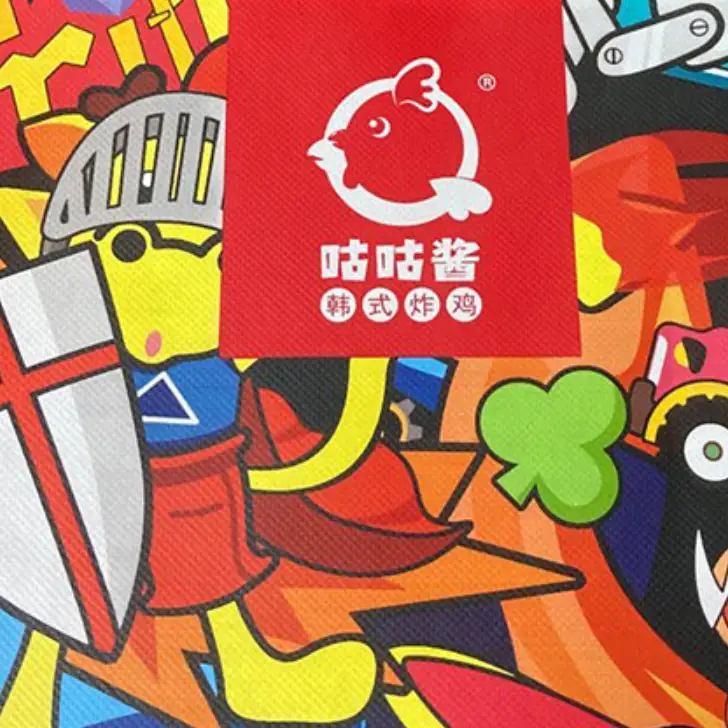
Non-woven fabric is used for laminated shopping bags. 1
Non-woven fabric is used for laminated shopping bags. 2
Non-woven fabric is used for laminated shopping bags. 3
Non-woven fabric is used for laminated shopping bags. 4
Non-woven fabric is used for laminated shopping bags. 1
Non-woven fabric is used for laminated shopping bags. 2
Non-woven fabric is used for laminated shopping bags. 3
Non-woven fabric is used for laminated shopping bags. 4

Non-woven fabric is used for laminated shopping bags.

5.0
design customization

    oops...!

    no product data.

    Go to homepage

    Product Details

    Q1: What is PP+PE Laminated/Coated Non-woven Fabric? What is the difference between the two?
    A: This product utilizes PP (polypropylene) spunbond non-woven fabric as a base material, which is then compounded with a PE (polyethylene) film to create a waterproof and impermeable substrate. The manufacturing process falls into two categories: • Coating (Extrusion Lamination): PE granules are melted at high temperatures and directly extruded onto the surface of the non-woven fabric, forming a single integrated layer. This method offers strong adhesion, is resistant to delamination, and provides excellent cost-effectiveness; • Lamination (Film Bonding): A pre-manufactured PE film is bonded to the non-woven surface using an adhesive via a hot-pressing process. This method allows for precise control over film thickness and offers high transparency, making it suitable for applications requiring stringent impermeability standards. Both variants combine the soft yet crisp texture characteristic of single-layer spunbond (S) non-woven fabric with the dual properties of waterproofing and impermeability provided by the PE film, making them staple consumables in the fields of protective gear for international trade and packaging.
    Q2: What constitutes the core base material? Which type of PP non-woven fabric is used as the substrate?
    A: The base material consists of brand-new PP (polypropylene) spunbond non-woven fabric, paired with a food-grade or industrial-grade PE coating/lamination layer. It is free from impurities and odorless. The fabric's basis weight (grammage) and density can be customized to ensure the structural strength of the base and the stability of the composite bond.
    Q3: What are the standard basis weight combinations, widths, and colors available?
    A: This product utilizes a composite structure featuring a PP non-woven base fabric combined with a PE film, allowing for flexible customization of the total basis weight. Standard specifications are as follows: • PP Base Fabric Basis Weight: 25 g/m² – 150 g/m² (Standard options: 30 g/m², 50 g/m², 70 g/m², 80 g/m²) • PE Film Basis Weight/Thickness: 10 g/m² – 50 g/m² (Corresponding thickness: 3–8 mil, i.e., 0.03 mm – 0.08 mm) • Total Finished Product Basis Weight: 35 g/m² – 200 g/m² (Standard options: 40 g/m², 60 g/m², 80 g/m², 100 g/m², 120 g/m²) • Width: 10 cm – 320 cm (Standard options: 1.2 m, 1.6 m, 2.4 m); supports precision slitting and sheet cutting services. • Colors: Standard options include natural white, pure white, blue, and green; custom Pantone colors and color printing are available upon request.
    Q4: Are the PE film specifications customizable? Is the coating/lamination applied to a single side or both sides?
    A: The basis weight, thickness, and transparency of the PE film can be customized. The standard thickness ranges from 3 to 8 mil (0.03 mm – 0.08 mm), and the thickness can be increased as needed to enhance impermeability. The default configuration features single-sided coating/lamination (with the waterproof side facing outward); however, for specialized applications, a double-sided composite structure can be customized to further reinforce impermeability, abrasion resistance, and tear strength.

    Q5: What are the core advantages of this product? How effective is its waterproofing and impermeability?
    A: Its core advantages include high tensile strength, tear resistance, superior waterproofing and impermeability, liquid leak prevention, as well as moisture and dust resistance. Furthermore, it is soft and easy to process. The PE film layer is dense and free of pinholes, allowing it to completely block liquid water, water vapor, dust, and oil stains. This makes it ideally suited for applications requiring high levels of impermeability—such as medical protective gear, packaging, and outdoor equipment.
    Q6: How is the product's breathability? Does it feel stuffy or damp?
    A: It features micro-breathable/water-resistant breathability; it effectively blocks liquid water while allowing a small amount of water vapor to escape, thereby preventing a stuffy or damp sensation. For applications requiring higher breathability, a customized microporous lamination process is available, offering a balance between waterproofing and air permeability.
    Q7: How are its temperature resistance and durability?
    A: It withstands temperatures ranging from -15°C to 85°C and remains stable under normal ambient conditions. It exhibits excellent resistance to folding and abrasion, and is not prone to cracking, delamination, or film detachment. For outdoor applications, a UV-resistant (anti-aging) version can be customized to extend the product's service life in outdoor environments.
    Q8: In which international trade sectors is it primarily utilized?
    A: It is widely applied across global sectors including protection, packaging, home goods, and outdoor products:
    • Medical Protection: Disposable surgical gowns, isolation gowns, protective suits, surgical drapes, and medical underpads;
    • Hygiene Products: Backsheets for diapers/sanitary pads, leak-proof layers for nursing pads, and disposable bed covers;
    • Eco-friendly Packaging: Waterproof non-woven bags, logistics packaging, fresh-keeping packaging for agricultural products, and bag/luggage linings;
    • Outdoor & Agricultural Use: Outdoor sunshades, agricultural thermal insulation fabrics, rain covers, and tent accessories;
    • Industrial & Home Applications: Dust covers, waterproof mattress covers, disposable tablecloths, and industrial leak-proof liners.

    Product Showcase

    PP+PE laminated/coated non-woven fabric features high tensile strength, tear resistance, and effective waterproofing and impermeability; it prevents liquid leakage, resists moisture and dust, and is soft and easy to process. The PE film layer is dense and free of pinholes, capable of completely blocking liquid water, water vapor, dust, and oil stains.

    未标题-1 (7)

    Application Industries

    • Medical Protection: Disposable surgical gowns, isolation gowns, protective suits, surgical drapes, and medical underpads;
    • Hygiene Products: Backsheets for diapers/sanitary pads, leak-proof layers for nursing pads, and disposable bed covers;
    • Eco-friendly Packaging: Waterproof non-woven bags, logistics packaging, fresh-keeping packaging for agricultural products, and bag/luggage linings;
    • Outdoor & Agricultural Use: Outdoor sunshades, agricultural thermal insulation fabrics, rain covers, and tent accessories;
    • Industrial & Home Applications: Dust covers, waterproof mattress covers, disposable tablecloths, and industrial leak-proof liners.
    98

    Why Choose Us?

    We fully understand that when selecting a supplier, you comprehensively evaluate factors such as history, scale, credentials, and production capacity to ensure the provision of reliable services—including competitive pricing, high-quality products, and professional service.

    Non-woven fabric is used for laminated shopping bags. 7
    Established in 2007
    MINGYU Nonwoven was established in Dongguan, Guangdong, in 1997; we established a large-scale production base in Hunan in 2007, and another production base in Zhuhai, Guangdong, in 2020.
    Non-woven fabric is used for laminated shopping bags. 8
    Factory Area
    A production base has been established in Zhuhai, Guangdong, covering an area of ​​50,000 square meters and housing eight high-standard non-woven fabric production lines.
    Non-woven fabric is used for laminated shopping bags. 9
    Monthly Output
    Our monthly production capacity reaches 1,000 tons for non-woven fabrics and 2.5 million units for non-woven bags; we specialize in providing spunbond non-woven fabrics, sanitary-grade non-woven materials, spunlace non-woven fabrics, and non-woven bags.
    3 (2)
    Client Country
    Our products are exported to over 50 sovereign nations—spanning Europe, Africa, Asia, North America, South America, and Oceania—and more than 150 clients have established long-term, stable cooperative relationships with us.

    About MINGYU

    Established in 1997, Mingyu Group is a large-scale enterprise integrating R&D, manufacturing, sales, and service, specializing in the production of eco-friendly non-woven fabrics and related products. The company's sales headquarters is located in Dongguan, Guangdong Province, while its production base is situated in Zhuhai, Guangdong Province, covering an area of ​​50,000 square meters.

    The company has successfully constructed and commissioned eight advanced non-woven fabric production lines. With a monthly production capacity of 1,000 tons, all products are manufactured in strict compliance with the ISO 9001 quality management system and have successfully obtained certifications for numerous international standards, including REACH, RoHS, California Proposition 65, EU EN71, and CFE-1633. The company's products are exported to over 50 countries worldwide, and it has established long-term, stable cooperative relationships with 150 clients.

    22

    Exhibition Site

    We actively participate in non-woven fabric exhibitions in various regions, including Vietnam, Saudi Arabia, the UAE, Russia, Germany, Italy, the United States, and the China Import and Export Fair.

    Exhibition

    Certificate Display

    Our company has obtained ISO 9001 and ISO 13485 management system certifications, and our products have passed numerous international standards, including REACH, RoHS, California Proposition 65, EU EN71, and CFE-1633.

    ce

    Client witness

    We have established long-term and stable partnerships with over 150 companies worldwide. You are welcome to visit our non-woven fabric factory in Guangdong, China.Below are group photos with some of our clients, including those from Europe (Germany, Poland), Africa (Burkina Faso, Côte d'Ivoire, Kenya), Southeast Asia (Indonesia, Vietnam), the Middle East, and other regions.

    未标题-1 (6)

    Container Carrying Capacity

    When loading non-woven fabric: a 20GP container holds approximately 4 tons; a 40GP holds approximately 8 tons; and a 40HQ holds approximately 12 tons.

    96

    FAQ

    1. What is non-woven fabric?

    Non-woven fabric is a textile material produced directly from fibers. The fibers are bonded together through mechanical, thermal, or chemical processes, bypassing traditional weaving or knitting stages. It is widely used in hygiene products, medical supplies, packaging materials, as well as in the agricultural and industrial sectors.


    2. What types of non-woven fabrics do you supply?

    We supply a wide variety of non-woven fabrics, including: Spunbond, SMS, Spunlace, Meltblown, and Needle-punched non-wovens. These fabrics can be customized to meet the specific requirements of various industries, such as medical, hygiene, packaging, and agriculture.


    3. What is the weight range (GSM) of your non-woven fabrics?

    The weight of our non-woven fabrics typically ranges from 10gsm to 150gsm. Different applications have different weight requirements; for example: Shopping bags: 60–100gsm; Medical non-wovens: 25–60gsm; Agricultural crop covers: 17–50gsm. We can provide customized solutions based on your specific needs.


    4. What fabric widths can you produce?

    Our standard fabric width ranges from 1.6m to 3.2m. Additionally, we can slit the fabric into narrower widths according to customer requirements.


    5. Can you customize colors and dimensions?

    Yes, we support OEM and customized production. Customization options include: fabric weight (GSM), width, color, roll length, and patterns or embossing designs. We can also match colors according to the Pantone color system.


    6. Which industries use your non-woven fabrics?

    Our non-woven fabrics are widely used in:Medical and healthcare products; Hygiene products (diapers, sanitary pads, etc.); Shopping bags; Furniture and upholstery linings; Agricultural crop covers; Packaging materials; and Filtration materials.


    7. What is your Minimum Order Quantity (MOQ)?

    Our standard Minimum Order Quantity (MOQ) is typically 1 ton per color; however, specific requirements may vary depending on product specifications and customization needs.


    8. Can you provide samples?

    Yes, we can provide free samples for your quality evaluation.

    Samples: Free of charge. Shipping: Freight collect or paid by the customer. Samples are typically ready within 1–3 days.


    9. What is your production lead time (delivery time)?

    The typical production lead time is 7–15 days; the exact duration depends on the order quantity and production schedule.


    10. How do you ensure product quality?

    We implement strict quality control measures throughout the entire production process: raw material inspection, in-line production monitoring, and finished product inspection.

    Our goal is to ensure that every batch of products possesses stable quality and consistent performance.


    11. How can I obtain a quotation?

    Please provide us with the following information: fabric type, gram weight (GSM), width, color, quantity, and intended application. Our sales team will respond to you within 12 hours.


    12. Can I visit your factory?

    Yes, we warmly welcome customers to visit our factory.

    If you are unable to visit in person, we can also arrange a virtual factory tour via video call.


    13. What packaging options do you offer?


    We typically package our fabrics in rolls, wrapped in PE film with an inner paper core. We also offer customized packaging services.


    14. To which countries does your company export products?


    Our non-woven fabric products are exported to numerous countries and regions, including: Europe, Africa, North America, South America, Southeast Asia, and the Middle East.

    We possess extensive experience in collaborating with international distributors and manufacturers.


    15. Why choose your company as your non-woven fabric supplier?


    We are a professional manufacturer of non-woven fabrics, featuring:

    Advanced production equipment

    Stable product quality

    Competitive ex-factory pricing

    Rapid delivery services

    Professional export experience


    We are dedicated to providing reliable solutions to customers worldwide.

    CONTANT US

    E-mail: sara@ecologynonwoven.com

    Mobile Phone: +86-18928212697

    Whatapp:17704079768

    Wechat: mingyunonwoven(+86-18928212697)


    Address

    Head Office: Baotun Road, Port Avenue, Houjie Town, Dongguan City, Guangdong Province, China 

    Production Base: No. 1138 Chanye Road, Qianwu Town, Doumen District, Zhuhai City, Guangdong Province China

    Get in touch with us
    Just leave your email or phone number in the contact form so we can send you a free quote for our wide range of designs!
    +86 17704079768
    sara@ecologynonwoven.com
    no data
    Related Products
    no data
    Copyright © 2026 Hunan Mingyu Nonwovens Co., Ltd. www.ecologynonwoven.com | Sitemap Privacy Policy
    Customer service
    detect